


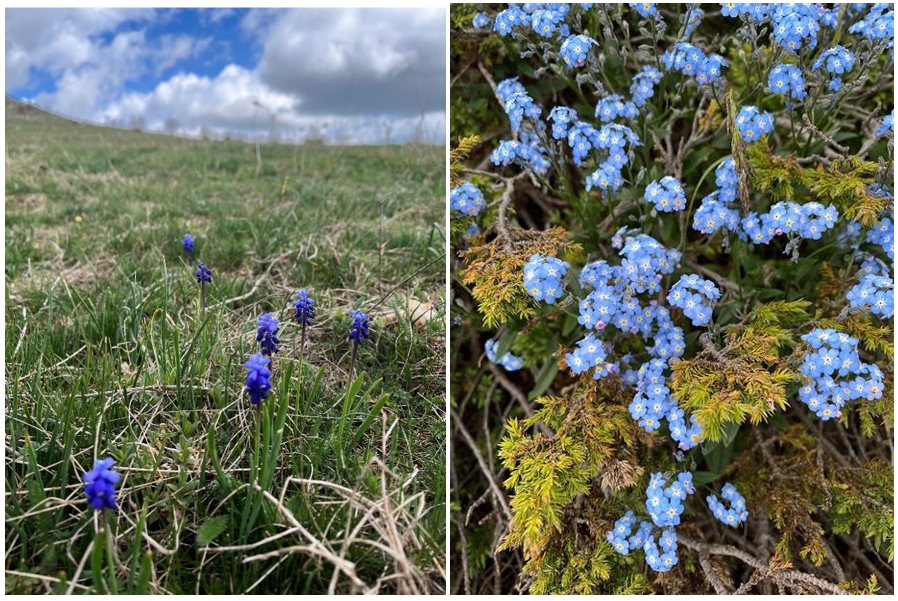
For January, we chose blue, and especially baby blue, as a symbol of the new year, the new beginning, the new us. There isn’t a more favorite color than blue in our history and modernity, in all its interpretations. Green and red are much behind it, and maybe this is not a coincidence. We find it everywhere and especially in nature, as source of life and renewal, of serenity and optimism. Water, birds, the sea (quiet and stormy), the sky (radiant and starry), the flowers (delicate and bright) and the hidden treasures (sapphire, aquamarine, lapis lazuli). All of them invariably carry the energy of picturesque and expressive blue within them.
It is curious to know that the blue color was of minor value in Antiquity.
Ancient Greeks and Romans praised highly red, white, and gold as symbols of splendor and prestige. For the Eastern cultures, however, blue was considered а true wealth. It was vividly present in interiors and clothing. In the Middle East, India, Egypt, blue minerals (listed above), as well as the indigo plant, were well known and used as dyes. Later, from the 13th century onwards, the blue color has been on the rise in Europe. It became a distinguished color of the elite - aristocrats and kings. Renaissance and Baroque artists skillfully used it in their canvases, and textile dyeing was a distinct and prestigious craft. Firstly – with the European woad plant (isatis tinctoria), and later with the indigo plant coming from far, delivering more durable, saturated and picturesque blue shades. Thanks to indigo, still today we enjoy the much beloved blue jeans, created by Levi Strauss in the late years of the 19th century.
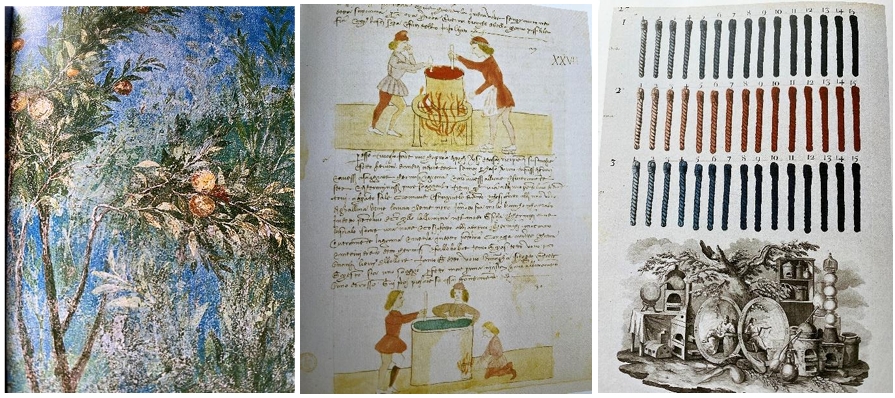
* (murals from Villa Livia, Prima Porta) (Florence, dyeing, 15c) (workshop catalogue with color shades, 18c)
In the 20th century, blue was an unceasing creative inspiration for modernist artists.
Picasso with his Blue period, Joan Miró with works such as The Diamond Smiles at Twilight, Willem de Kooning and many other artists work generously with the color blue.
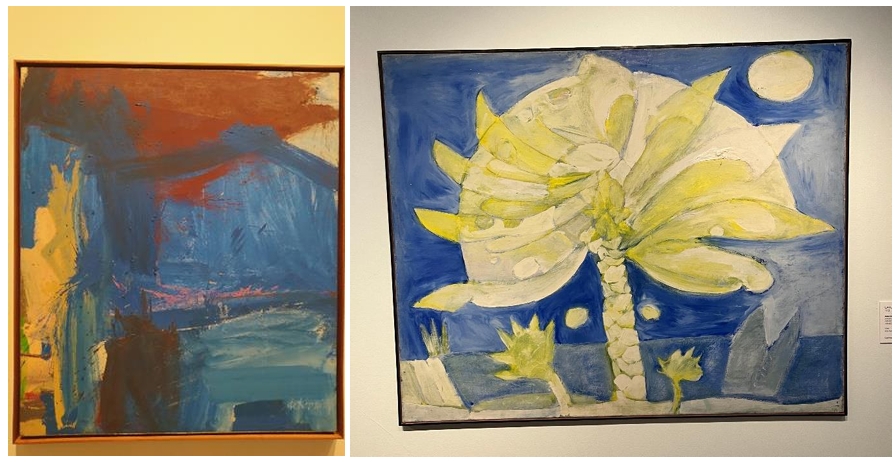
(Willem de Kooning, 1904 – 1997) (Carl-Henning Pedersen, Arabic Landscape, 1948)
Today, blue continues to be present everywhere in life – in art, design and fashion.
It is most loved for its tranquility, comfort and serenity, carried with its many delicate and unobtrusive tones. At the same time, with its deeper notes, it is a symbol of dignity and reliability, and confidently finds its admirers. There is another blue - bright, sparkling and cheerful - which we either adore or ignore completely. In general, we can't go wrong with this color, it is so multi-layered and diverse that everyone finds their own tone. There is no fashion collection and season without blue – Glacial Blue, Faded Denim, Mosaic blue, Midnight, just name it. This 24/25 winter season is no exception!
We chose two shades of blue for our F/W 24/25 collection – the beloved baby blue for Most Loved and royal blue for Glitter Glitter.
To January in Blue, we added a small selection of Last Chance pieces with sea shades, because we always carry the sea with us – even in winter. We wish you to wear it too!

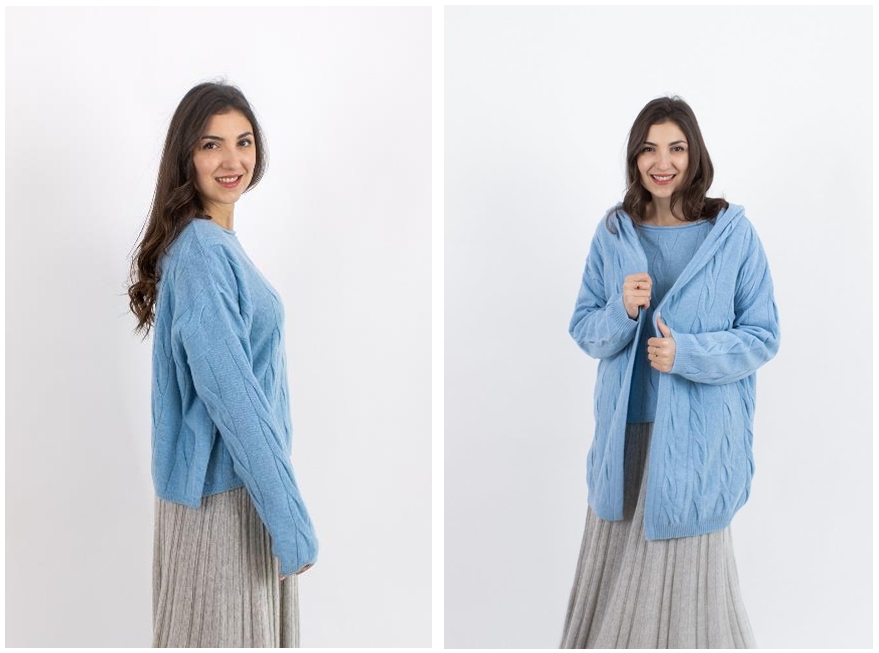
Immerse yourself in the new beginning of 2025 with January in Blue and discover your favorite knitted garment. We are going to knit fine yarn stories together again, aren’t we?!
Warmly yours, AMAYA ROS
*Source: BLUE The History of Blue, Michel Pastoureau
